Our research team focuses on developing advanced in vitro models of the human gut that faithfully recapitulate the complex interactions between epithelial, vascular, and immune cells, as well as a diverse microbiome. This work is driven by the need to better understand the mechanisms underlying intestinal homeostasis and its disruption (dysbiosis), which plays a key role in the development of many diseases.
We develop next-generation Gut-on-Chip platforms that integrate multicellular intestinal architecture with dynamic fluid flow, peristaltic-like mechanical stimulation, immune components, and multispecies microbial communities. By leveraging microfluidic technologies, we recreate physiologically relevant conditions that enable long-term, functional studies of host–microbiome interactions.
A key aspect of our research is the integration of these advanced biological models with state-of-the-art analytical approaches, including high-resolution proteomics and metabolomics. This allows us to comprehensively characterize molecular processes occurring at the host–microbiome–immune interface and to identify novel biomarkers and therapeutic targets.
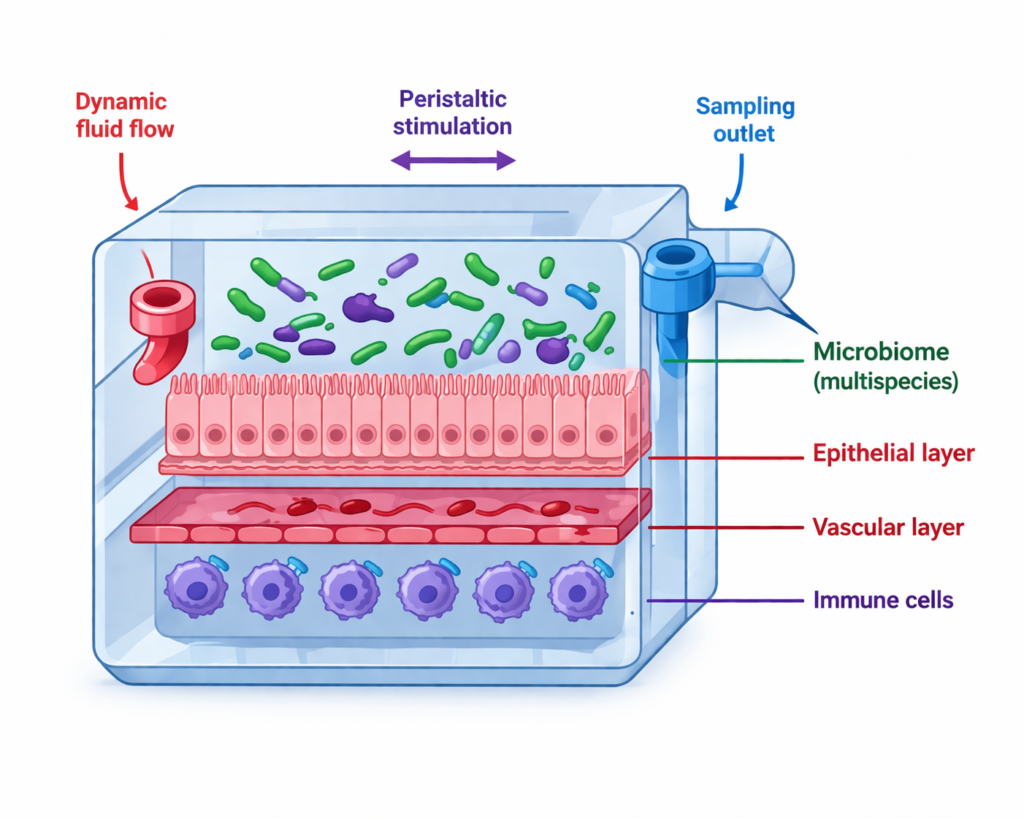
People involved in the project:
Publications:
- –
Conferences:
- –