
Neurological disorders are the leading cause of disability and the second leading cause of death worldwide. Due to the complexity of the human nervous system, and despite considerable efforts by scientists, neuroscience still remains one of the most failure-prone areas of research. The use of modern Cell-on-a-chip microfluidic systems may be an opportunity to increase progress in this area. The intensive development of the field of microfluidics in research on cellular processes and imitation of diseases observed in recent years, allows the discovery of new possibilities related to, for example, the use of human cells with the so-called increased physiological importance (e.g. human nervous system cells or stem cells). An important social problem are rare autoimmune demyelinating diseases of the peripheral nervous system. The pathomechanism of these diseases is still largely unknown, while their treatment is very limited. The use of microfluidic systems modeling demyelinating processes in human nerve cells may contribute to a significant expansion of knowledge in this field.
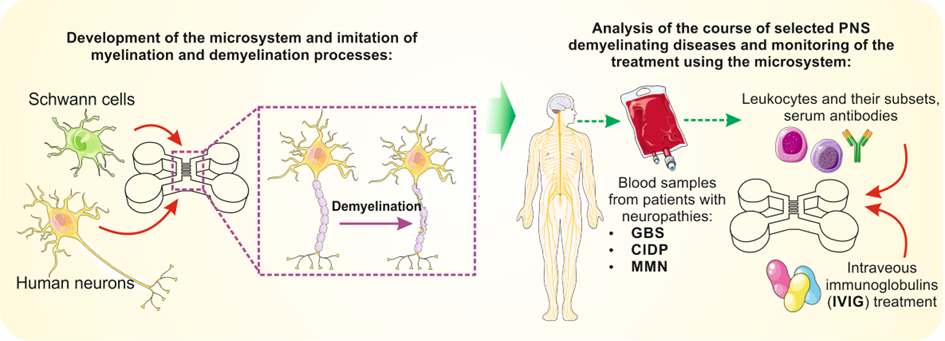
The main aim of the conducted research is to develop a microsystem for the analysis of processes associated with the pathomechanism of selected demyelinating diseases of the peripheral nervous system (PNS). An in vitro procedure is being developed that imitates the processes of myelination and demyelination of human nerve cells, as well as a comprehensive diagnostic approach enabling the use of the developed microsystem in the diagnosis of patients with symptoms of selected demyelinating PNS diseases, including Guillain-Barré syndrome (GBS), chronic inflammatory demyelinating polyneuropathy (CIDP), and multifocal motor neuropathy (MMN). The cellular model developed through the use of the microfluidic system will be used to monitor the course of these diseases over time and to monitor the effectiveness of intravenous immunoglobulins (IVIG), the only available therapy in diagnosed patients.
People involved in the project:
Publication:
- –